COLLEGE PARK HISTORY
The Drive District centers around lively Edgewater Drive—a vibrant main street filled with locally owned shops, destination dining, public art, and high-energy community street events that keep the district moving year-round. Just beyond the storefronts, charming 1900s bungalows, scenic lakes, and welcoming parks reflect the character and history that make College Park truly one of a kind. It’s a neighborhood where heritage and momentum live side by side.
To dive deeper into the story of our community, explore College Park by Tana Mosier Porter.
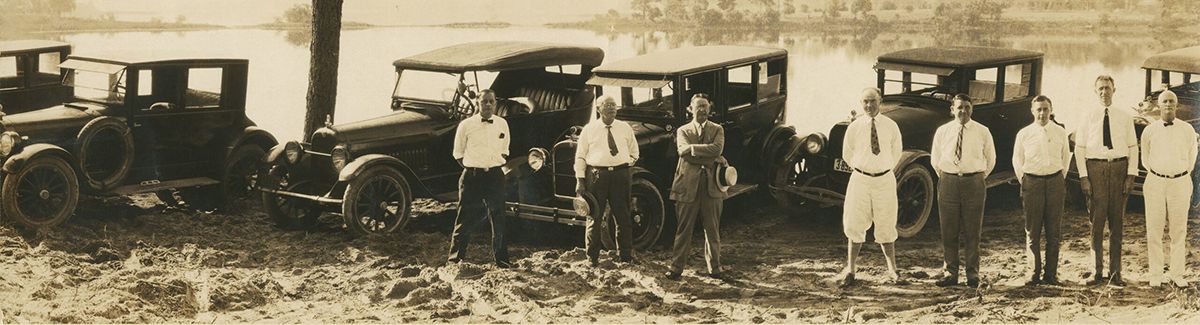
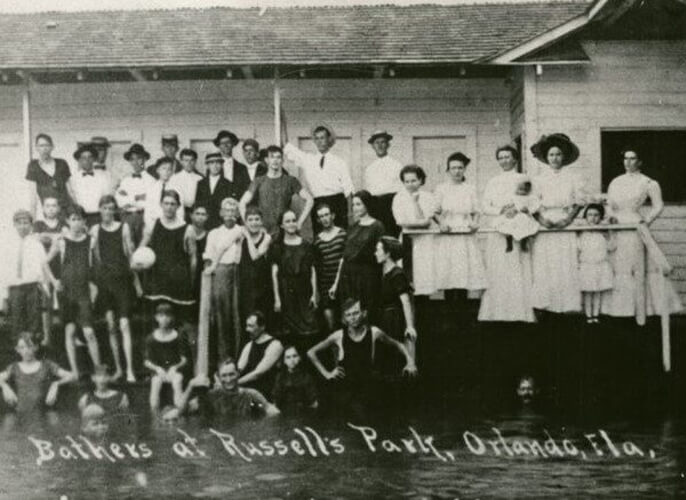
Historic photos courtesy of the Orange County Regional History Center.
The 1800s - Citrus Groves and Early Residents
The first resident of the area now known as College Park was citrus grower John Ericsson who built his home at 19 West Princeton Street, in the middle of an 80-acre citrus grove. With the arrival of large groups of settlers on the South Florida Railroad in 1880, College Park began to take shape, with the development of more homes and businesses.
Growth in College Park and Orlando continued until The Great Freeze of December 1894, where Orlando reached an all-time record low of 18°F. The brutally cold weather destroyed much of the citrus crop, forcing many residents to abandon their Florida groves and return North. Growth didn’t resume in Florida until 1905, when tourism began to grow and eventually became a major industry.
The 1900s - Real Estate Boom
In the 1920s, the real estate boom helped College Park grow and prosper. During this decade, many of the neighborhood's best-known subdivisions were plotted.
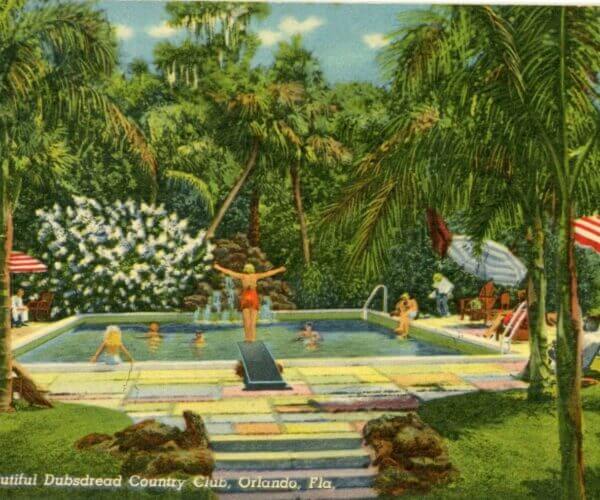
In 1921, Walter Rose began the tradition of naming streets after colleges and universities. In 1923, H. Carl Dann and associates founded Dubsdread Country Club and Golf Course, which is still in operation today as a public course.
Early Residential Developers & Neighborhoods:
- Walter Rose's Rosemere in 1921
- H. Carl Dann's Dubsdread in 1923
- J.P. Holbrook's Edgewater Heights in 1924
- Frank L. Anderson's Anderson Park in 1924
The boom turned into a bust with The Great Depression. During this period, savvy businessman Welborn C. Phillips began buying many vacant lots, priming himself for a post-war economic boom.
The mid 1900s - Stars in College Park
College Park has been home to two well-known figures in the post-war years. Astronaut John Young lived at 815 West Princeton Street as a child. Young gave 42 years of active service to NASA, the longest career of any astronaut. He was the ninth person to walk on the moon as the Commander of Apollo 16 in 1972.
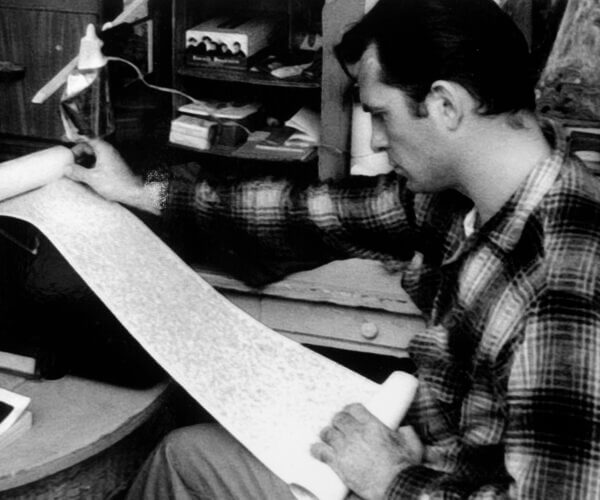
Beat generation writer Jack Kerouac lived at 1418 Clouser Avenue in 1957-58 during the publishing of his masterpiece On The Road. He also wrote his follow-up novel The Dharma Bums at this home. Kerouac’s home now houses a non-profit called The Kerouac Project, a haven for up-and-coming writers. Four writers are selected each year to stay in the home for three months. During their stay, they work on a writing project which is presented at the end of their residency.
Unique to College Park - The Mystery Sink
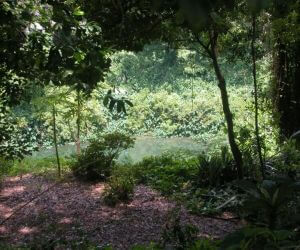
In true Florida fashion, College Park has its own unforgettable natural phenomenon. In January 1922, a massive sinkhole suddenly opened in the Biltmore Shores area—an event that would become known as the legendary “Mystery Sink,” or Emerald Springs.
Over the decades, it drew national attention. The U.S. Department of the Interior studied the site in 1959, and in 1966 the U.S. Navy’s sonar research team documented it as the deepest known body of water in Florida—estimated at 500 feet or more. By 1970, the site was closed to the public, but its story remains part of the rich fabric of our community’s history.
Moments like these add to the character and legacy that shape College Park—where history, curiosity, and evolution are always part of the story.
Read more about the Mystery Sink here and discover another fascinating chapter of The Drive District.